


External Regulator Explained: Marine Alternator Control & Battery Charging - PYS Tech Talk
Transcript is auto-generated.
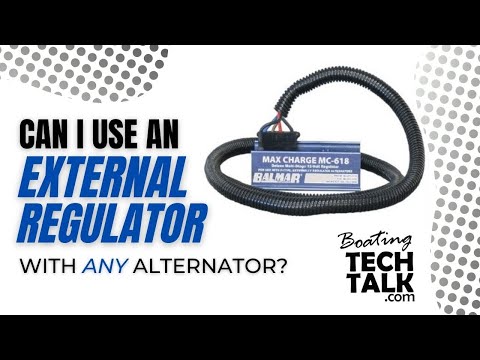
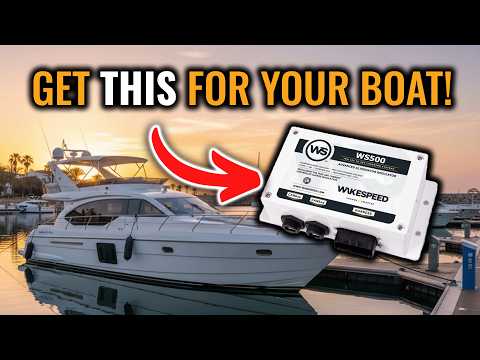
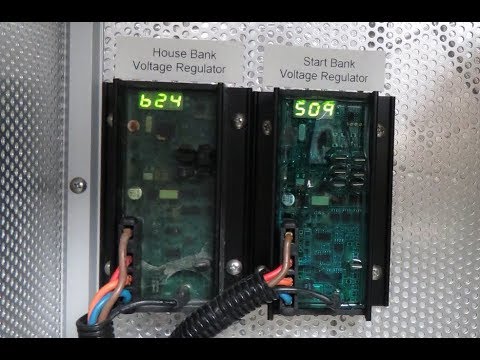
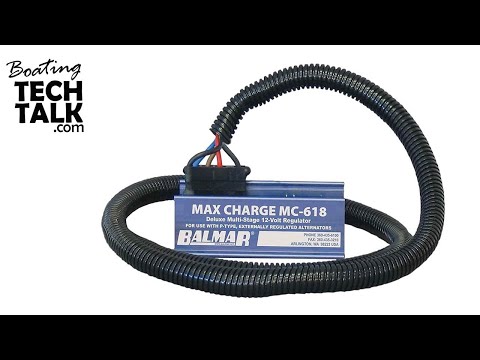
What's an external regulator and why would I want one on my boat? Check out this video to find out the benefits of an external regulator for your boat. Whether you need a remote consultation design or perhaps inviting us aboard your boat, Pacific Yacht Systems is here to help. Check out the links in the description below. Hey everyone, Jeff Cote here with Pacific Yacht Systems. We've got another installment of Tech Talk. We've got a question from a fellow boater, John. John asks, "Hey Jeff, do I really need a WakeSpeed external regulator for my boat?" So, you know, as as boat owners, we all are sort of faced with this endless list of things that we think we should do or we're being told to do. And external regulators is one of these things you might be hearing about on other channels or even hearing on the dock. So, I have to tell you, I am a huge fan of external regulators, especially for some of us who have large battery banks on our boat and want to recharge our battery banks with our alternators. And we want to do so as efficiently and as safely as possible. So, if your boat is sitting at the dock and you rarely use it and if you do so, you're a light user, you don't have that much power battery bank size, you go from dock to dock, an external regulator is not necessarily going to be for you. But for the others of us that have a boat where we're actually leaving maybe the dock and we're going to an anchorage and then from an anchorage, we're going to another anchorage and we're actually cruising and we have no ability to recharging our boat via either a generator or connected to shore power via battery chargers, the reality is we're charging our boats via alternators. And either singular or plural, but let's assume just one for this instance. So, an alternator in itself is always driven by a regulator and all alternators, even the ones we have in our car, are driven by a regulator. You can have a smarter regulator, and this is where the word external, meaning you actually have a black box that is outside of the alternator, that is going to drive the output of that alternator. And that is called an external regulator. And there's uh John was talking about a specific model, which is the model I have on my boat, Wake Speed or the brand, and Balmar is also a good choice. I've had both, and we've installed many of either. So, definitely pros and cons to each one. And so, an external regulator, what it does it basically allows you to customize a charge profile for your battery. So, that's a big positive because a standard alternator is not really outputting to lithium. It's outputting to a standard lead-acid battery, and it's doing so cautiously to not overcharge the battery. But, that cautiousness is also a trade-off with being efficient or maximizing the charge output so that you can reduce the charge time or maximize the charge output from your alternator. So, that's where an external regulator is going to give you the ability of customizing and deciding what your battery needs. And is it going to even again, if it's AGM or lithium, you're going to be able to either customize it within the external regulator, or even better, for instance, on my boat, my batteries are actually talking to the external regulator and telling the external regulator exactly what it needs. So, the external regulator on my boat doesn't even actually decide what it's not even guessing or estimating. It's actually being told. So, it's actually talking on a communication bus between the batteries and the external regulator, and it's actually being told by the batteries that it needs so and so charge. So, that's a huge positive. The next one is sensors. You can actually have multiple sensors on a uh external regulator. Temperature, obviously, you can have temperature sensor at the battery, temperature sensor at the alternator. And you can also even have a uh current uh measuring actually the current output, so you actually know how much charge is actually coming in the batteries. And they can make your effective charge rate on your alternator double. It's pretty significant. So, if you've got a 120 amp alternator, you might actually get up to double, but for sure 50% increase charge if you're putting an external regulator. So, that is a reason why some of us, especially the ones that are actually cruising and are using our boat from anchor to anchorage, where remember what I said, we don't have the option of running a generator that can run a charger that can recharge our batteries, or we're not connected to shore power, we're looking at where the alternator is going to do with the recharging, an external regulator is a really good device to recharge your batteries as fast as possible. And also, and lastly, the external regulator is also there to make sure that your alternator does not overheat, and by overheating would actually also cause it to die prematurely. So, it's a win-win-win-win-win. It's a great device. They're not too expensive. They're worth considering. And if you've got further questions or you're looking into it, we've got a lots of videos on external regulators on our website. Dig in. Go Go down the rabbit [music] hole with me and discover the pros and cons of an external regulator for your boat. Perhaps one invites us aboard your boat, or you've got more questions, check out all the links in the description below. Thanks for watching, [music] and don't forget to subscribe and like this video. It helps us grow the channel. >> Hey fellow boaters. We're going to be doing a lot more tech talk videos. If you've got any suggestions for future videos, leave them in the comments below. Once again, thank you for watching.